


Auntie Chuông, the oldest female elephant, slowly continued her story.
In 1993, Bô was brought to the zoo from Tanh Linh, Dong Nai, when he was still very young. He was a young elephant who had been left behind by his herd after they moved away from the farmers’ cultivated areas.
For Saigon Zoo and Botanical Gardens, Bô was a precious addition. His arrival opened up new opportunities at a time when the zoo’s elephant group consisted entirely of females.
When Bô first arrived, he was gentle and very affectionate toward people, much like a young child looking for someone to depend on. His childhood passed peacefully until he reached the age of 15.
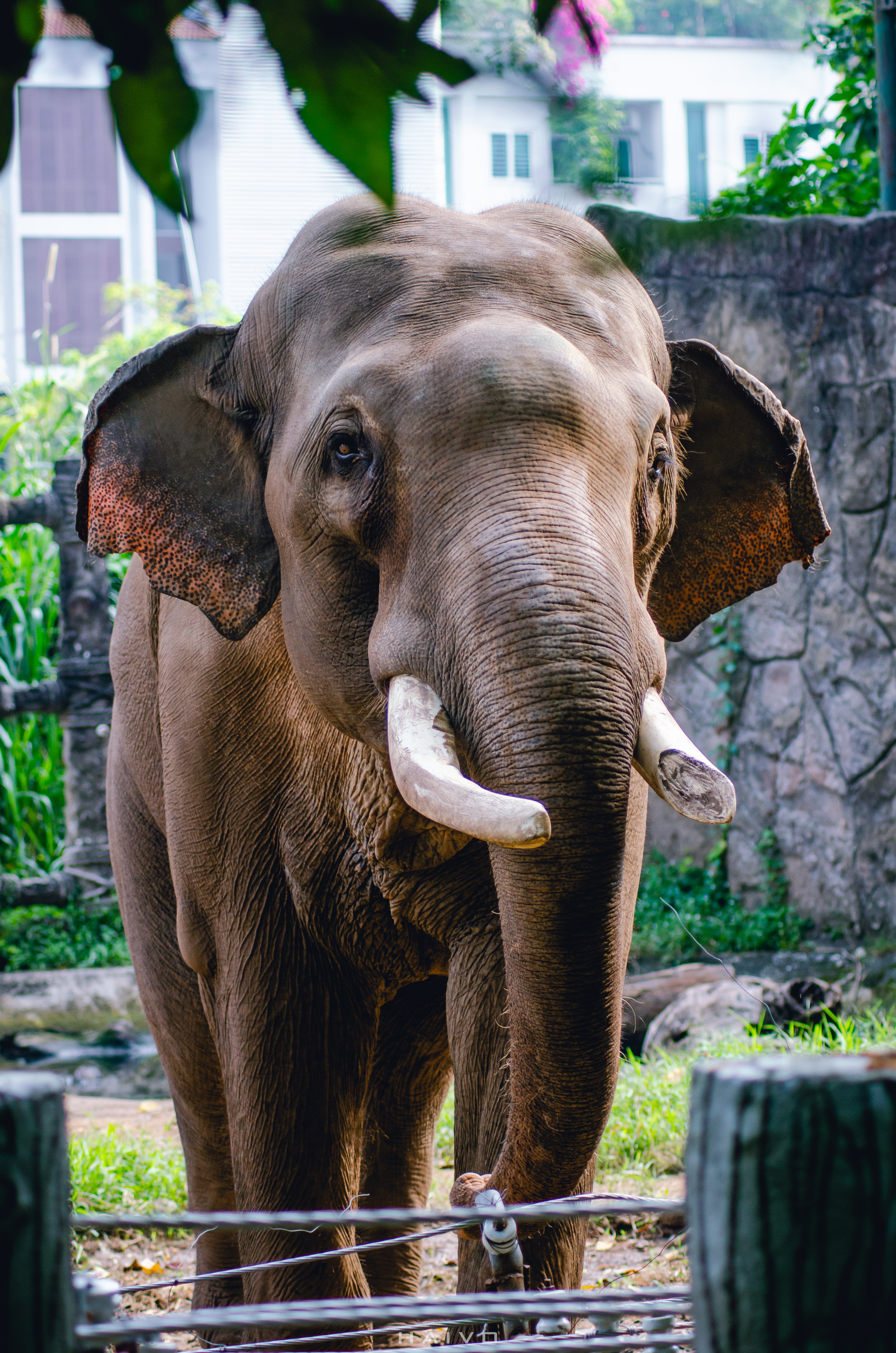
By then, Bô had grown into a large and handsome young bull, weighing around 3.5–4 tons. His tusks had grown long and slightly pointed, and he would deliberately raise them and point them toward the female elephants and keepers whenever something displeased him. A dark secretion from his temporal glands ran down his cheeks, making his handsome face look darker and more intimidating.
With their experience and knowledge of elephant care, the keepers understood that Bô had reached maturity and was beginning to display his wild instincts. Experts refer to this condition as musth, a recurring period that occurs in mature male elephants. Musth may occur every year or at irregular intervals, and may last for a longer or shorter period depending on the bull’s state of stimulation and nutritional condition. During musth, a male elephant can become aggressive and less cooperative, and may injure other elephants in the herd or even their keepers.
In the wild, male elephants usually leave the herd when they reach this stage of maturity and live alone. Elephant herds generally consist of females, calves, and immature males, and are led, guided, and influenced by the oldest female in the herd. As the saying goes, “age brings wisdom.” Older elephants have greater experience and remarkable memories, including memories of places where food and water can be found, which can help ensure the survival of the entire herd.
Although Bô had to live separately, he was not unhappy. Like Chuông, he was given a spacious area with all the necessary facilities and amenities. Here, he could freely express his wild instincts and strong personality without having to worry about Chuông keeping him in check as she had when he was young.
Today, despite his enormous size and long tusks, which are enough to make other elephants wary and respectful, Bô has never forgotten the lessons he received from Chuông when he became too naughty or went too far. With just one movement, curling her trunk, lowering her head, and pushing forward, Chuông could send him tumbling onto all four legs.
Bô is very proud of his tusks. He knows they are one of his most distinctive and attractive features to visitors compared with the female elephants sharing his enclosure. His aunties and sisters could never have tusks like his, even in their dreams. Female Asian elephants do not have tusks.
With Bô as part of its elephant group, Saigon Zoo and Botanical Gardens has an opportunity to contribute to the breeding and conservation of the Asian elephant.