


Burma Padauk
Scientific name: Pterocarpus macrocarpus Kurz
English name: Burma Padauk
Family: Fabaceae
Local name: Giáng hương trái to
Characteristics
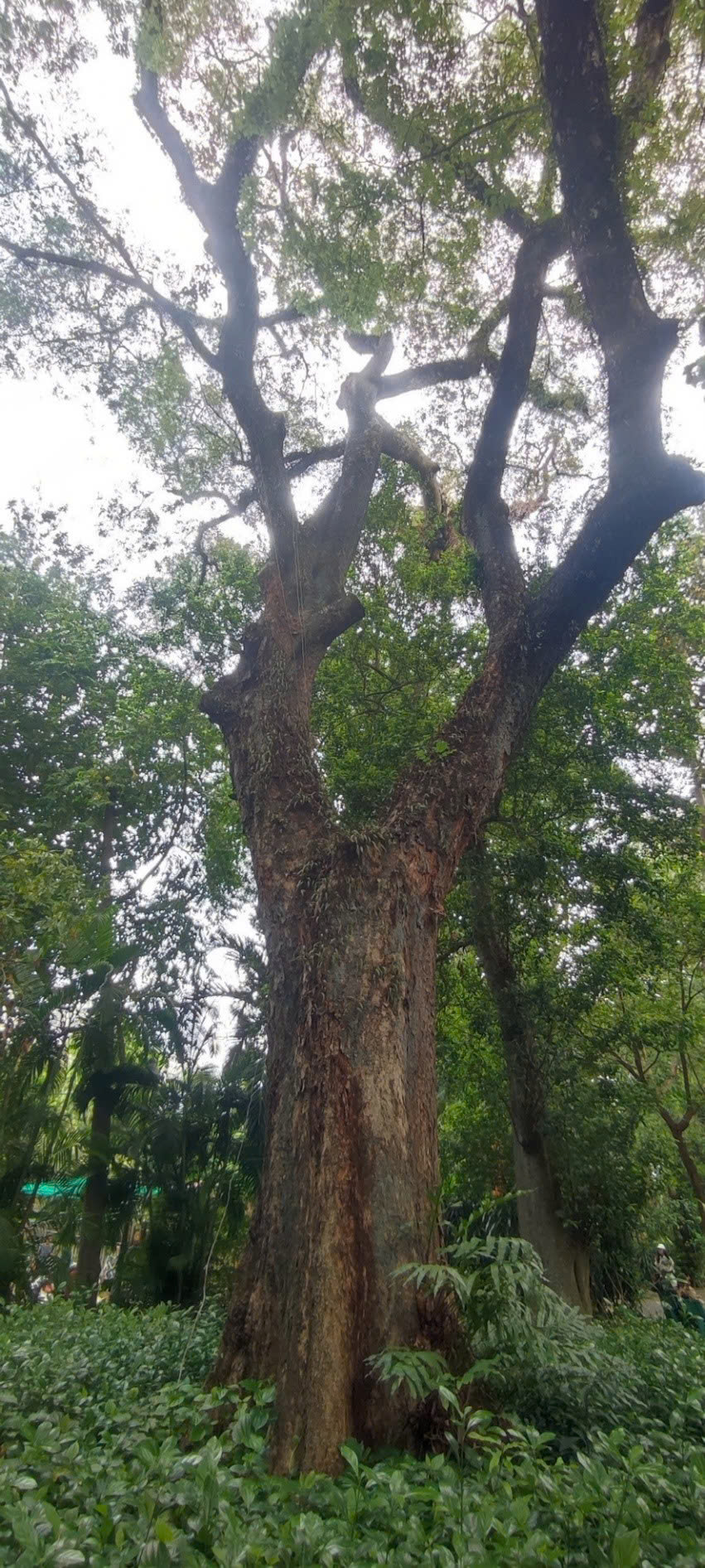
A large hardwood tree, typically reaching 20 to 30 meters in height, with a trunk diameter that can exceed 1 meter. The trunk is straight, and the broad, umbrella-shaped crown provides generous shade. Young branches are covered with fine hairs, while older branches become smooth.
The bark is grayish-brown, about 1.5 to 2 cm thick, with vertical cracks and peeling patches. When damaged, it releases a distinctive bright red resin.
The leaves are alternate, odd-pinnate compound leaves with 7 to 13 oval leaflets arranged alternately.
The flowers are yellow and grow in clusters from the leaf axils. Each cluster is about 7 to 10 cm long and contains many flowers.
The fruit is a flat, round pod, about 4 to 5 cm in diameter, with a hard raised center containing 1 to 3 seeds. The seeds are crescent-shaped and turn brown when mature.
Ecology
This tree grows at elevations of 20 to 680 meters above sea level, usually on relatively flat terrain with gentle slopes.
It is well adapted to tropical monsoon climates with distinct wet and dry seasons, and thrives in average annual temperatures of 21 to 26.5°C.
It is drought-tolerant and can grow in a range of soil types, including grey soil, red basalt soil, and even nutrient-poor soils.
Natural Distribution
In Vietnam: Central Vietnam and the Central Highlands, including Phú Yên, Đắk Lắk, Gia Lai, and Kon Tum, as well as the Southeast region, including Đồng Nai and Tây Ninh.
Elsewhere: Laos and Cambodia.
Value
Burma Padauk is a valuable timber tree. Its wood is hard, durable, attractive in grain, and resistant to warping, making it highly prized for construction, high-end furniture, and fine handicrafts.
The bark contains tannins used in the leather industry, while its red resin can be used as a natural dye.
The tree also has ornamental value thanks to its wide crown and attractive flowers.
Because it has been heavily exploited, wild populations have declined. Conserving and replanting this species is therefore important for maintaining the genetic resources of this valuable hardwood tree.
Location
Opposite the hippo enclosure, Saigon Zoo & Botanical Gardens.