


I. HISTORY, HERITAGE & LEGACY
1. When was the Zoo established?
Right after arriving in Southern Vietnam, the French tried setting up farms for Arabian horses and Burmese rice, but they didn't quite take off.
In March 1864, Louis Adolphe Germain, a French military vet, was tasked with transforming 12 hectares of wild land near the Naval Shipyard into a botanical garden. He laid the very first paths, planned the nurseries, and invited locals to contribute regional animals.
A year later, in March 1865, the project was completed. The authorities invited J.B. Louis Pierre, from the Calcutta Botanical Garden (India), to be the first Director. His mission? Collecting Indochinese flora and fauna for the Paris Museum and testing valuable economic plants.
Our official anniversary is March 23rd.
2. Did it open to the public immediately after inauguration?
Not quite. It took about 4 years and 4 months of preparation after the initial founding before the gates opened to visitors on July 14, 1869—coinciding with Bastille Day (French National Day).
3. Who is the man honored by the bust at the main entrance?
That is J.B. Louis Pierre, our founding director. He was a scientist who dedicated his entire life to botany. In February 1933, a granite memorial was erected to honor him.
His touching final words are inscribed there: "I am retired, but there is still so much to do for botany; my only regret is that time is running out and life is too short." In 1994, for our 130th anniversary, the monument was moved to its current prominent spot at the main entrance.
4. What is the story behind the Bronze Elephant statue?
This was a gift from King Paramindr Maha Prajadhipok of Siam (Thailand) during his visit to Saigon in April 1930.
For a long time, it was tucked away behind trees near the parking lot. To celebrate 20 years of Vietnam-Thailand diplomatic relations, it was moved to the left of the Hung King Temple, where it now shines as a favorite photo spot for visitors and Thai delegations.
5. What are the Zoo's primary functions?
We operate with four core missions:
- Conservation: Breeding and preserving rare flora and fauna.
- Scientific Research: Partnering with universities to study zoology, botany, and veterinary medicine.
- Education: We host over 100,000 students annually for "experiential learning" programs.
- Recreation: Providing a peaceful "green lung" for all ages—from playgrounds for kids to quiet retreats for the elderly.
6. How many species live here currently?
We currently house about 127 animal species (including 100 rare breeds) and a lush collection of 320 plant species, featuring over 2,000 timber trees like Rosewood and Agarwood.
II. ANIMAL CARE, WELFARE & CONSERVATION
7. Which species have been successfully bred here?
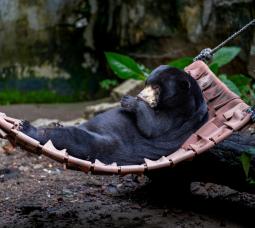
We are very proud of our "baby boom"! We’ve successfully bred Crested Argus, Indochinese Tigers, Bengal Tigers, Golden Deer, Giraffes, and most recently, Noel—our adorable Sun Bear cub.
Do they mate naturally? Yes! And for the tricky births, our dedicated keepers and vets are always there to lend a hand.
8. How are the animals cared for?
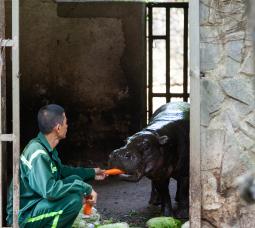
We follow strict internal protocols and international animal welfare standards. There is always a supervisor ensuring their food, space, and health checks are top-notch.
9. Do you look after the animals' mental health?
Absolutely. Mental well-being is a pillar of modern animal welfare. We provide "Environmental Enrichment" to ensure our residents stay active and mentally stimulated.
10. Do you cooperate with international organizations?
Yes, we are active members of the South East Asian Zoos Association (SEAZA) and the World Association of Zoos and Aquariums (WAZA). In 2024, we successfully implemented a series of welfare upgrades based on SEAZA’s rigorous audit recommendations.
11. Does the Zoo have a wildlife protection program?
Providing animals with the best possible care within our capacity is a core wildlife protection activity at Saigon zoo and Botanical Garden (SZBG).
Additionally, SZBG collaborates with law enforcement to receive, care for, and rehabilitate wildlife, contributing to legal wildlife protection efforts.
Conserving rare species—including those not for public display—alongside breeding and reintroducing them into the wild when eligible, is also a vital part of our mission.
We regularly conduct educational and outreach programs to raise public awareness about nature conservation and wildlife protection.
These efforts constitute the SZBG Wildlife Conservation Program, which is implemented throughout our operations.
The program's primary activities include:
-
Conservation breeding.
-
Wildlife reintroduction.
-
Habitat improvement and environmental enrichment.
-
Animal exchanges between institutions to prevent inbreeding, refresh the gene pool, and enhance conservation effectiveness.
12. Are the animals kept here just for profit?
No. While the Zoo has moved to a self-financing model (receiving no government budget), our mission is strictly conservation and education. Ticket sales go directly back into feeding the animals, paying our experts, and maintaining the park. We don't do circuses or forced performances.
13. Why do some animals look old or thin?
I can tell from your question that you care deeply about the well-being of the animals at SZBG.
Animals are much like us—within the same species, there are those who look fit or frail, and some who look younger or older than their actual age. What we see on the outside is often just our own perception.
From a professional standpoint, SZBG always provides the best possible conditions to ensure the health of our animals. Each species and each individual has its own specialized diet and care plan. We constantly work on environmental enrichment to ensure they live comfortably in a captive environment.
When an animal falls ill, it receives medical treatment; those with chronic conditions are placed on specific care regimes and diets. Your perspective may also change depending on the species.
Take the elephant you mentioned: she is now over 65 years old. In the wild, it would be difficult for an elephant of that age to survive with worn-down teeth and fading strength.
Similarly, our white lioness is 16 years old. Compared to the lifespan of lions in the wild, she is considered elderly, so being lean is quite natural. Despite her appearance, she is still eating well and remains in good health.
14. Why is there a specific smell near some enclosures?
Nature can be a bit stinky! Carnivores and fish-eaters naturally have a stronger scent. We clean constantly and use deodorizers, but in a close-up zoo experience, some "wild aromas" are part of the journey.
15. How do you reduce stress for the animals?
We use several strategies:
- Designing enclosures with "hiding spots" (caves or back-rooms) so animals can retreat from public view if they feel stressed.
- Keeping loud events and large crowds far away from sensitive enclosures.
- Installing clear signage to remind visitors to keep noise levels down.
16. Why are there "Do Not Feed" signs?
Human food—even in small amounts—can cause severe digestive issues or fatal allergic reactions for animals. With thousands of visitors daily, "just one small snack" quickly turns into a dangerous surplus of calories. All our animals have strictly weighed, nutritionally balanced diets prepared in our dedicated kitchen.
17. When and where can I feed the animals?
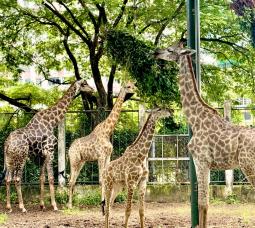
You can feed our goats, sheep, deer, and giraffes at specific times under staff supervision. Check the signs at the enclosures!
18. Can I touch the animals?
For areas where feeding is permitted, our staff will be there to assist you. Please refer to the schedule posted at each enclosure for specific service times. Generally, any animal you are allowed to feed can also be touched. However, we ask that you be gentle and show care toward the animals while remaining mindful of your own safety.
19. Why shouldn't I tease or make noise at the animals?
Would you like to be disturbed while you're working or resting? Animals feel the exact same way.
Just like us, animals deserve respect for their space and well-being, even those on public display. Harassing them not only impacts their physical and mental health but can also create dangerous situations for the animals, their caretakers, and visitors alike.
Most warning signs are placed near predator enclosures for visitor safety and to ensure the animals' psychological well-being. Even if there is no direct contact, teasing makes them frustrated and distressed. This can lead to self-harming behaviors, such as striking their mouths against the glass until they bleed, injuring their limbs, or reacting aggressively by throwing food or objects at the crowd.
20. Why aren't there animal circus shows?
SZBG is a conservation and research institution dedicated to the care and husbandry of animals; it is not a circus or a purely commercial entertainment venue. Consequently, we do not host animal circuses or train animals to perform behaviors that contradict their natural instincts.
Certain animals at the Zoo undergo positive reinforcement training. This is designed to encourage cooperation with caretakers and veterinarians during health checks, transport, and routine management. These activities also serve to simulate natural behaviors, encourage physical movement, reduce stress, and enhance the overall well-being of the animals.
As a member of the World Association of Zoos and Aquariums (WAZA) and the South East Asian Zoos and Aquariums Association (SEAZA), SZBG strictly adheres to international standards of animal welfare. We strictly prohibit any form of coercive training or performances for entertainment purposes.
Currently, we offer an educational program that showcases the natural behaviors of our animals. These movements are carefully selected to ensure they do not mimic human actions, focusing instead on visitor education. These sessions are primarily held on Saturdays and Sundays.
III. BOTANY, ENVIRONMENT & LANDSCAPING
21. What is the oldest tree in the park?
SZBG was originally a portion of the Southeast Vietnamese forest, and while many ancient trees remain, their exact ages have never been formally recorded. According to oral history and legacy records, the small-leafed Lòng mang (Pterospermum grewiaefolium), located between the Tiger, Buff-cheeked Gibbon, and Sun Bear enclosures, is considered the oldest. Since the early days of SZBG, even after losing a large part of its trunk, the tree has remained healthy. Its base was already as massive then as it is today, suggesting it is now nearly 200 years old.
Another notable veteran is the Mét tree (Styrax agrestis) near the train station and the Museum of History. Much like the Lòng mang, it was severely damaged during a major storm in the year of the Dragon (Canh Thin). However, from the remaining stump, it showed incredible resilience, sprouting new branches that formed a wide, ancient, and haunting canopy. Today, only its base remains, measuring over 2m in diameter. Elders say it dates back to the same era as the Lòng mang, making it hard to tell which is truly older.
Beyond these two, SZBG is home to many other forest remnants, including Dầu con rái (Dipterocarpus alatus) near the Nhan Huong relic site, as well as Burma Padauk, Pahudia, and Thitka near the Hippopotamus area, and Hopea near the Gibbon and Langur enclosures.
22. Where is the "Vietnam Heritage Tree"?
The oldest Sọ khỉ tree (also known as Xà cừ or Khaya senegalensis, from the Meliaceae family) in Southern Vietnam is located right here. It was planted shortly after the founding of SZBG, marking the very first time this African species was introduced to Vietnam. At that time, it was only 1.3 meters tall; today, it is over 160 years old.
In 2024, this magnificent tree was officially recognized as a Vietnamese Heritage Tree.
You can find this historic landmark near the Lotus Pond and the Large Bird Aviary.
23. Is there a medicinal garden or Bonsai collection?
Medicinal Herb Garden: Located near the giraffe enclosure (Thao Em). Additionally, many other plants throughout the SZBG grounds serve as sources for traditional medicine, such as Camphor (Cinnamomum camphora), Hopea, and Burma Padauk.
Bonsai Collection: Primarily situated within the Ornamental Garden and the area directly opposite it.
Ornamental Plants: These are landscaped across the entire grounds for visitors to enjoy.
24. How are the plants maintained?
Care techniques vary depending on the plant type—whether they are shade trees, ornamentals, flowering plants, or turfgrass—and all follow SZBG’s specialized technical protocols.
- Irrigation: We utilize both automated and semi-automated watering systems.
- Fertilization: Regular nutrient management based on plant needs.
- Pruning and Trimming: Routine maintenance for safety and structural integrity.
- Pest and Disease Control: Integrated management to ensure plant health.
For further technical details, please contact our Botanical Enterprise. Formal inquiries should be directed to the Administration and Personnel Department with an official letter of introduction.
25. Are there any "special" flowers?
Look for the Cannonball Tree (Đầu lân), whose flowers grow directly from the trunk and look like mythical lion heads, or the Large-leafed Ashoka (Vàng anh lá lớn) which bursts into vibrant orange blooms.
26. Are the fruits in the park edible?
We grow various fruit trees (Star Apple, Wild Apple) to increase biodiversity, but these are for the animals and the landscape, not for public consumption.
27. Can I learn about native plant species here?
Yes! Please contact the Zoo Education Center to book a guided tour. You can reach us at 028.3910.0885 or email trungtamgiaoducvuonthuTCVSGsg@gmail.com.
28. Am I allowed to hang a hammock on the trees for a nap?
A nap in such a lush, green setting sounds wonderful. However, imagine if every visitor did the same - would our park remain beautiful? Think of it from the tree's perspective: bearing constant weight and swaying motion is a significant strain.
While some use ropes, others use wire and forget to remove it, which eventually cuts into the tree’s "skin." These scars last for years, hindering the tree's health and growth.
Therefore, SZBG does not permit hammocks on any trees.
29. What is SZBG’s environmental policy?
As an institution dedicated to education and conservation, environmental protection is our top priority. We maintain "Green – Clean – Beautiful" standards across all operations, from animal husbandry to waste and wastewater treatment. We also integrate conservation messages into our tours and school programs to inspire public action in protecting rare species.
30. Do you have recycling or environmental education programs?
During the summer, we host a Recycling Corner at the Book Garden, where visitors can learn to upcycle waste into useful items for free. We also feature art installations made from recycled materials. Our "Waste and Its Impact" experiential program allows students to learn, pick up litter, and practice recycling firsthand.
31. Why is there so much litter in the park? What is the cleanup plan?
During peak hours or sudden spikes in visitor numbers, our collection team may not be able to keep up immediately. However, our environmental staff works continuously throughout the day to process waste. We kindly ask for your cooperation in keeping the park clean to maintain a civilized, green environment for everyone.
IV. MUSEUM – EDUCATION – EXPERIENCES
32. Why can’t I touch the specimens in the Museum?
These specimens look lifelike because they consist of real bones and hides, meticulously preserved by artisans. Because they are authentic remains, the preservation process involves chemicals that can be harmful to humans. To protect your health and the integrity of these delicate exhibits, we ask that you do not touch them.
33. Do the preservation chemicals affect visitors' health?
It’s a common concern! The liquid preservatives are absorbed into the specimens and allowed to evaporate before display. While there may be trace amounts in the air, they are well below safety thresholds. Your health and the well-being of our community are our primary concerns.
34. Does the Museum display human remains?
No. Our museum only displays animal and plant specimens. Human remains (mummies) are housed at the HCMC Museum of History, which is a separate entity from SZBG.
35. What educational programs are available for students?
We offer tailored programs for schools and groups, including:
- Specialized topics on flora, fauna, and nature conservation.
- Controlled observation of animal specimens.
- Hands-on botany: making plant specimens and species identification.
- Junior Caretaker activities: scrubbing turtle shells, preparing peacock feed, or feeding goats under expert supervision.
36. Do you organize conservation awareness activities?
Yes. Conservation and environmental awareness are integrated into all our guided tours, workshops, and media communications to inspire the community to protect our planet.
V. VISITOR SERVICES & AMENITIES
37. Are there rest areas or quiet spots to relax?
While we do not offer overnight accommodation, the park is filled with rest shelters, stone benches, and shaded green spaces perfect for relaxing during your visit.
38. Do you rent bicycles inside the park?
No. To ensure the safety of all visitors, especially children and seniors, bicycles are not permitted. Instead, you can enjoy the park on foot, or use our electric shuttle and internal train services.
39. Can I bring my own food?
Yes, you are welcome to bring outside food. We only ask that you dispose of trash properly and keep the park clean.
40. Are pets allowed?
No. Pets are not permitted to ensure the safety of our resident animals and maintain disease control. If needed, you may contact ZooHome Pet at 0979.395.985 for paid pet-sitting services.
41. Is there a playground for children?
Yes! We have a free Mini Sand Playground, as well as two paid amusement areas for kids and teens near the Clock Face and the Thi Nghe Gate. Kids can also enjoy the train ride and feeding animals at the Children's Zoo.
42. Is there medical assistance available?
Yes. Medical staff are on duty during opening hours to provide first aid and basic health support for visitors.
43. Do you have a luggage storage service?
Yes, you may store personal belongings at the designated area near the parking lot.
44. Do you support large group visits?
Yes. We have dedicated areas for large gatherings, such as the Main Stage, the Maze, and the Hall (fees apply). For electricity, banners, or extra staff support, please contact our Business Enterprise at 094.108.8599.
45. What are your opening hours? Are you open on Holidays/Tet?
We are open daily, including weekends and all public holidays.
- Opening time: 07:00 AM
- Ticket sales end: 05:30 PM
- Park closes: 06:00 PM Ticket prices remain the same during Tet and Holidays unless otherwise announced.
46. Where can I find a map?
You can scan QR codes at the entrances and major exhibits or access the map directly on our official website.
47. General Regulations of SZBG
To ensure safety and animal welfare, please follow these rules:
- Order & Hygiene: No littering; supervise children at all times.
- Animal Welfare: Do not bring pets. Do not feed the animals unless part of an official activity. No teasing or throwing objects into enclosures.
- Landscape Protection: Do not pick flowers, step on grass, or hang hammocks.
- Safety: No unauthorized vehicles, street vending, or dangerous items (weapons, explosives, traps). Violators may be asked to leave or compensate for damages as per the law.
VI. CONTACT & SUPPORT
48. How can I contact Customer Service or provide feedback?
You can message our official Facebook page, call 028.3829.1425, or email TCVSG@saigonzoo.vn.
49. Do you accept sponsorships or financial donations for conservation?
Currently, SZBG does not accept private financial donations. Our conservation and animal care efforts are funded by our operational revenue and strictly managed according to state and professional regulations.