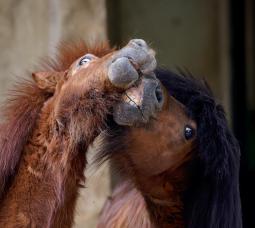



Thị Mai is calm and gentle. She turns her head softly, her eyes steady and serene whenever her name is called. Not far away, Vú Sữa, the youngest of the family, is busy exploring. Unlike his mother, he is energetic and a little mischievous, trotting around the yard and letting out soft neighs as if seeking attention. At his age, curiosity draws him to every fallen leaf and unfamiliar sound.
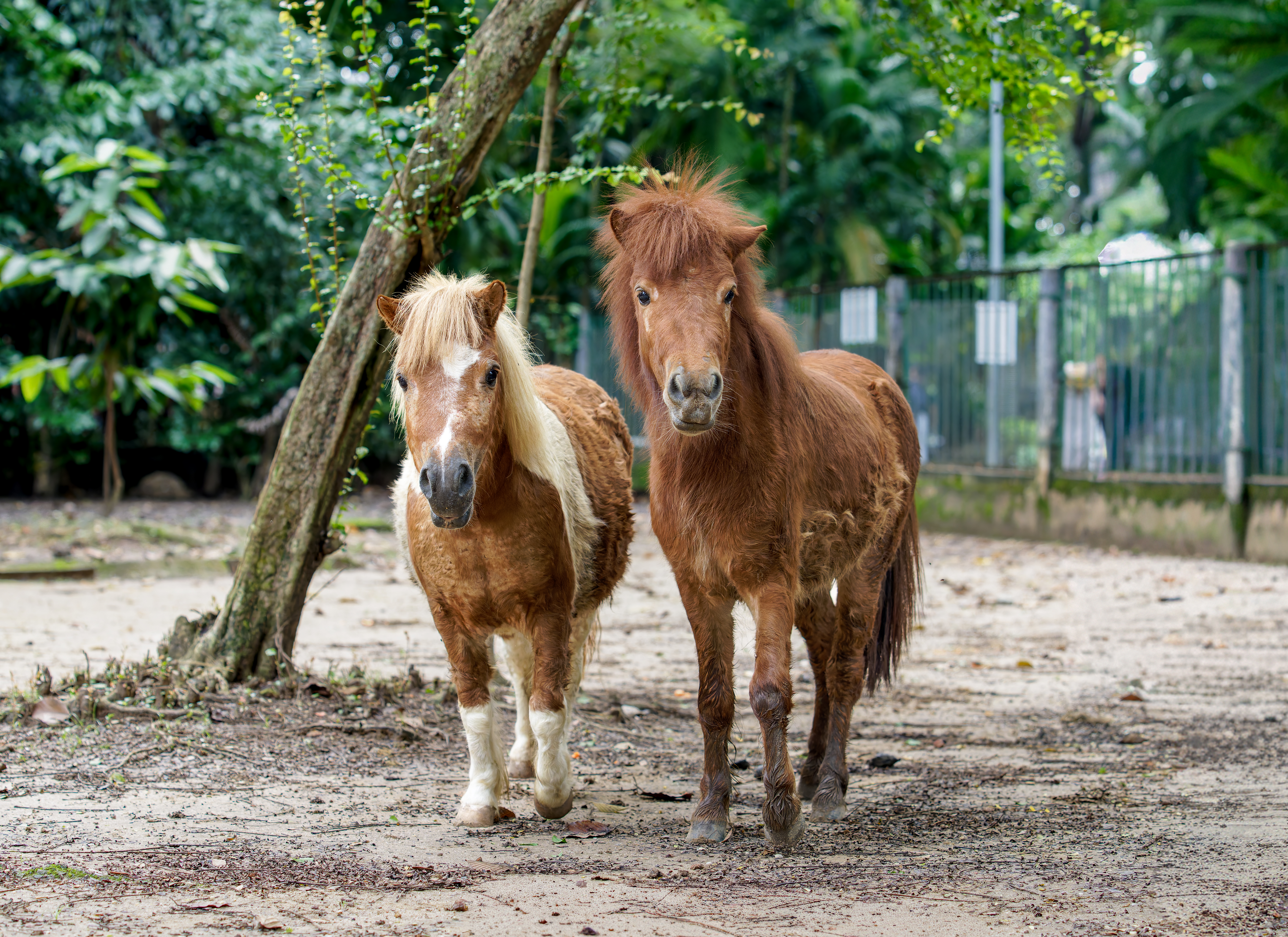
Further off, Văn Mai, Thị Mai’s companion, grazes quietly. A silent guardian of the family, he carries a calm, steady presence—observing more than reacting. Three individuals, three distinct personalities, together forming a small yet vivid portrait within the green space of Saigon Zoo.
Care Through Trust
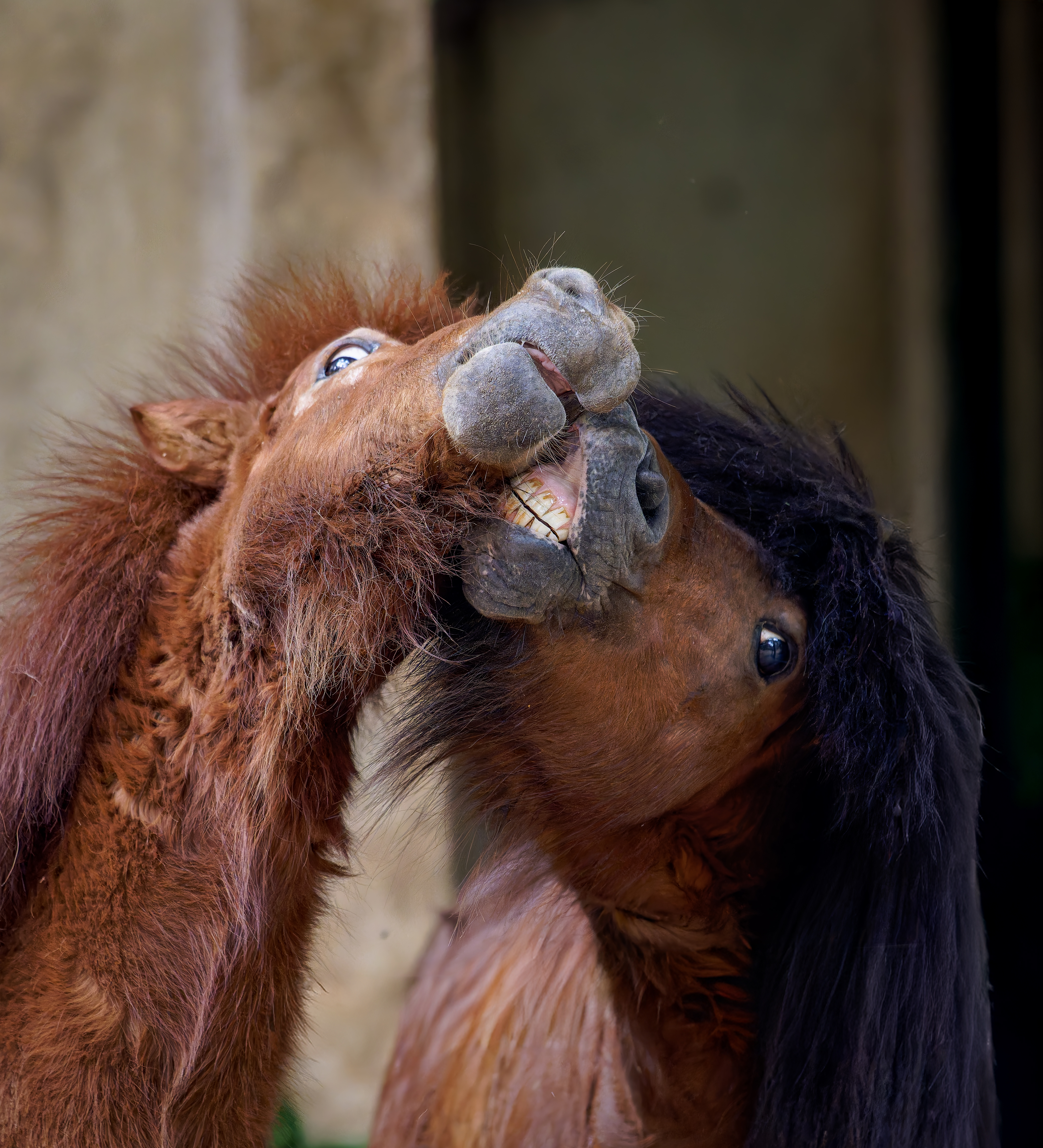
Grooming takes place as part of the daily routine—an essential aspect of care and enrichment that supports both the animals’ physical and mental well-being. Each one is brushed gently, strengthening the bond between keepers and animals. This process not only keeps them clean and relaxed but also allows for the early detection of minor injuries or parasites.
They especially enjoy being brushed along their backs and hindquarters. When the brush finds just the right spot, they stand still in quiet delight, their eyes half-closed. This response is no coincidence—it is built on trust.
At the zoo, care is never associated with force or punishment. Instead, keepers rely on positive reinforcement, rewarding desired behaviors with treats such as carrots, sweet potatoes, or bananas, always prepared in safe, bite-sized pieces.
Daily Diet & Routine
Each miniature horse consumes around 7 - 8 kilograms of dry feed per day, which is divided into three meals: morning, midday, and late afternoon. Their diet is carefully measured and monitored, supplemented with fruits, vitamins, minerals, and a constant supply of clean water.
Sensitive and Social
Horses are naturally social animals with excellent memories. They not only remember routes and routines but are also highly sensitive to human emotions. A rushed or tense approach can make them uneasy, while patience and gentle interaction gradually earn their trust.
Vú Sữa is a clear example. At first, he was shy around strangers. Yet with calm, consistent interactions—and a few rewarding bites of carrot—he has grown more confident, now approaching visitors with curiosity.
More Than a Display
Amid the steady flow of visitors, the miniature horse barn offers a different perspective on animals. They are not merely creatures to observe, but individuals with emotions, personalities, and needs.
- Thị Mai — gentle and composed
- Vú Sữa — playful and curious
- Văn Mai — quiet and watchful
Each one contributes a chapter to a story that unfolds anew each day.
A Quiet Understanding
Beyond the visit lies a deeper understanding—that animals can feel joy, anxiety, and trust. Proper care is not only about physical health, but also about building a meaningful bond between humans and nature through patience and respect.
As the sunlight fades, Vú Sữa continues to trot about playfully, while Thị Mai stands calmly beside the feeding trough. The miniature horse barn settles into the close of a peaceful day. Within the green space of Saigon Zoo, their small story goes on—a gentle reminder that care and understanding lie at the heart of every conservation effort.
Thị Mai is calm and gentle. She turns her head softly, her eyes steady and serene whenever her name is called. Not far away, Vú Sữa, the youngest of the family, is busy exploring. Unlike his mother, he is energetic and a little mischievous, trotting around the yard and letting out soft neighs as if seeking attention. At his age, curiosity draws him to every fallen leaf and unfamiliar sound.
Further off, Văn Mai, Thị Mai’s companion, grazes quietly. A silent guardian of the family, he carries a calm, steady presence—observing more than reacting. Three individuals, three distinct personalities, together forming a small yet vivid portrait within the green space of Saigon Zoo.
Care Through Trust
Grooming takes place as part of the daily routine—an essential aspect of care and enrichment that supports both the animals’ physical and mental well-being. Each one is brushed gently, strengthening the bond between keepers and animals. This process not only keeps them clean and relaxed but also allows for the early detection of minor injuries or parasites.
They especially enjoy being brushed along their backs and hindquarters. When the brush finds just the right spot, they stand still in quiet delight, their eyes half-closed. This response is no coincidence—it is built on trust.
At the zoo, care is never associated with force or punishment. Instead, keepers rely on positive reinforcement, rewarding desired behaviors with treats such as carrots, sweet potatoes, or bananas, always prepared in safe, bite-sized pieces.
Daily Diet & Routine
Each miniature horse consumes around 7 - 8 kilograms of dry feed per day, which is divided into three meals: morning, midday, and late afternoon. Their diet is carefully measured and monitored, supplemented with fruits, vitamins, minerals, and a constant supply of clean water.
Sensitive and Social
Horses are naturally social animals with excellent memories. They not only remember routes and routines but are also highly sensitive to human emotions. A rushed or tense approach can make them uneasy, while patience and gentle interaction gradually earn their trust.
Vú Sữa is a clear example. At first, he was shy around strangers. Yet with calm, consistent interactions—and a few rewarding bites of carrot—he has grown more confident, now approaching visitors with curiosity.
More Than a Display
Amid the steady flow of visitors, the miniature horse barn offers a different perspective on animals. They are not merely creatures to observe, but individuals with emotions, personalities, and needs.
- Thị Mai — gentle and composed
- Vú Sữa — playful and curious
- Văn Mai — quiet and watchful
Each one contributes a chapter to a story that unfolds anew each day.
A Quiet Understanding
Beyond the visit lies a deeper understanding—that animals can feel joy, anxiety, and trust. Proper care is not only about physical health, but also about building a meaningful bond between humans and nature through patience and respect.
As the sunlight fades, Vú Sữa continues to trot about playfully, while Thị Mai stands calmly beside the feeding trough. The miniature horse barn settles into the close of a peaceful day. Within the green space of Saigon Zoo, their small story goes on—a gentle reminder that care and understanding lie at the heart of every conservation effort.
Thị Mai is calm and gentle. She turns her head softly, her eyes steady and serene whenever her name is called. Not far away, Vú Sữa, the youngest of the family, is busy exploring. Unlike his mother, he is energetic and a little mischievous, trotting around the yard and letting out soft neighs as if seeking attention. At his age, curiosity draws him to every fallen leaf and unfamiliar sound.
Further off, Văn Mai, Thị Mai’s companion, grazes quietly. A silent guardian of the family, he carries a calm, steady presence—observing more than reacting. Three individuals, three distinct personalities, together forming a small yet vivid portrait within the green space of Saigon Zoo.
Care Through Trust
Grooming takes place as part of the daily routine—an essential aspect of care and enrichment that supports both the animals’ physical and mental well-being. Each one is brushed gently, strengthening the bond between keepers and animals. This process not only keeps them clean and relaxed but also allows for the early detection of minor injuries or parasites.
They especially enjoy being brushed along their backs and hindquarters. When the brush finds just the right spot, they stand still in quiet delight, their eyes half-closed. This response is no coincidence—it is built on trust.
At the zoo, care is never associated with force or punishment. Instead, keepers rely on positive reinforcement, rewarding desired behaviors with treats such as carrots, sweet potatoes, or bananas, always prepared in safe, bite-sized pieces.
Daily Diet & Routine
Each miniature horse consumes around 7 - 8 kilograms of dry feed per day, which is divided into three meals: morning, midday, and late afternoon. Their diet is carefully measured and monitored, supplemented with fruits, vitamins, minerals, and a constant supply of clean water.
Sensitive and Social
Horses are naturally social animals with excellent memories. They not only remember routes and routines but are also highly sensitive to human emotions. A rushed or tense approach can make them uneasy, while patience and gentle interaction gradually earn their trust.
Vú Sữa is a clear example. At first, he was shy around strangers. Yet with calm, consistent interactions—and a few rewarding bites of carrot—he has grown more confident, now approaching visitors with curiosity.
More Than a Display
Amid the steady flow of visitors, the miniature horse barn offers a different perspective on animals. They are not merely creatures to observe, but individuals with emotions, personalities, and needs.
- Thị Mai — gentle and composed
- Vú Sữa — playful and curious
- Văn Mai — quiet and watchful
Each one contributes a chapter to a story that unfolds anew each day.
A Quiet Understanding
Beyond the visit lies a deeper understanding—that animals can feel joy, anxiety, and trust. Proper care is not only about physical health, but also about building a meaningful bond between humans and nature through patience and respect.
As the sunlight fades, Vú Sữa continues to trot about playfully, while Thị Mai stands calmly beside the feeding trough. The miniature horse barn settles into the close of a peaceful day. Within the green space of Saigon Zoo, their small story goes on—a gentle reminder that care and understanding lie at the heart of every conservation effort.